Juventus Basketball Team: A Forgotten Legacy in Turin
Juventus is a name that echoes through football history。but the Juventus basketball team remains a shadowed chapter in Italian sport. Founded in 1930 as a section of the broader Juventus sports club, the team competed in Italy's top divisions for decades, yet its story is rarely told outside niche circles. I stumbled upon a faded team photo from 1957 in a Turin flea market—players in black-and-white striped jerseys。arms crossed, staring into the camera with a quiet defiance. That image sparked a question: how does a club with such a storied football identity handle a basketball legacy that faded into oblivion?
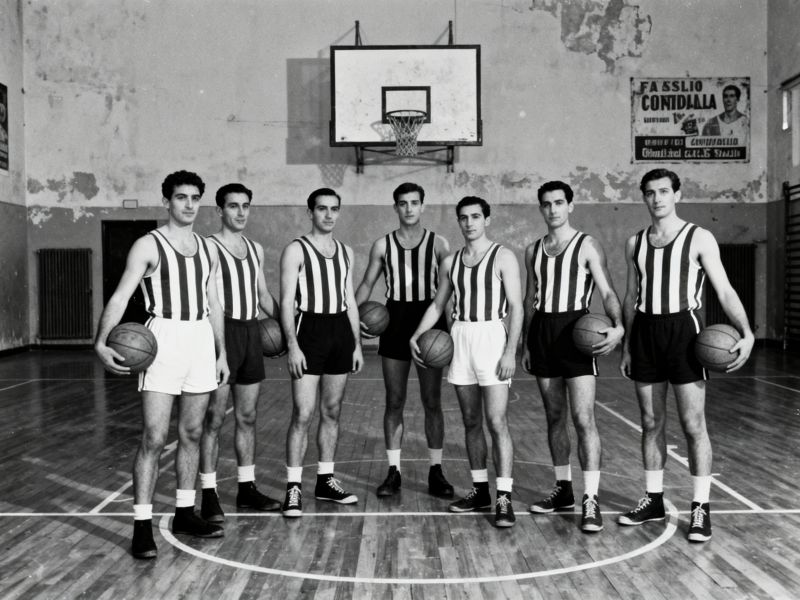
The Juventus basketball team's peak came in the 1960s, when they finished as runners-up in the Italian league twice, in 1965 and 1966. Playing at the Palavela, a venue better known for ice hockey, the team drew crowds of 5,000—modest by today's standards but substantial for a club prioritizing football. Their style was gritty, defense-first, anchored by center Gianni Bertolotti, a local product who worked as a bank clerk between games. Bertolotti once told a reporter that the football side's dominance meant basketball always felt like a stepchild. “We trained after their morning sessions。using the same gym, but never the same spotlight” he said. That sentiment captures the inherent tension: a basketball team carrying the weight of a football empire's brand.Financial strains in the 1970s forced the Juventus basketball team to dissolve in 1973, a decision that still fuels debate among old-timers in Turin's basketball bars. The official reason was budget cuts。but whispers suggest the football leadership saw little commercial upside. A former season-ticket holder, Marco Ferrero, now 78, recalls the final home game: “We lost by two points, and nobody cried. We just walked out into the rain, knowing it was over” That quiet resignation says more than any trophy could. The club's brief revival in the 1980s as a youth academy never regained senior competitive status, leaving a gap in the city's sporting fabric.Today, Juventus football dominates the Allianz Stadium, while basketball fans in Turin follow Auxilium Torino, a separate club with no Juventus ties. The absence of the Juventus basketball team creates an odd void—a what-if that lingers in local sports lore. I asked a young Juventus fan about the basketball history;he shrugged. “I know they had a team once。but it's like hearing about a grandfather who played semi-pro. Interesting, but irrelevant” That indifference is telling. Brand power doesn't automatically translate across sports, and Juventus never fully committed to the experiment. The black-and-white stripes belong to football, and basketball here became a footnote.Reviving the Juventus basketball team seems unlikely. The economics of Italian basketball are fragile。
and Juventus's ownership has shown zero interest in diversifying beyond football's global reach. Still, the legacy matters—not as a nostalgia trip, but as a case study in brand extension gone quiet. The team's story reminds us that sports clubs are not monoliths;they are collections of decisions, some of which leave behind only a photograph and a few newspaper clippings. For Turin, that's enough to keep the conversation alive, even if the final buzzer sounded fifty years ago.
Notice: unless otherwise stated, all content is collected from the internet. If it infringes your rights, please contact us for removal.